Complete Guide to the Sign Language Alphabet in Spanish
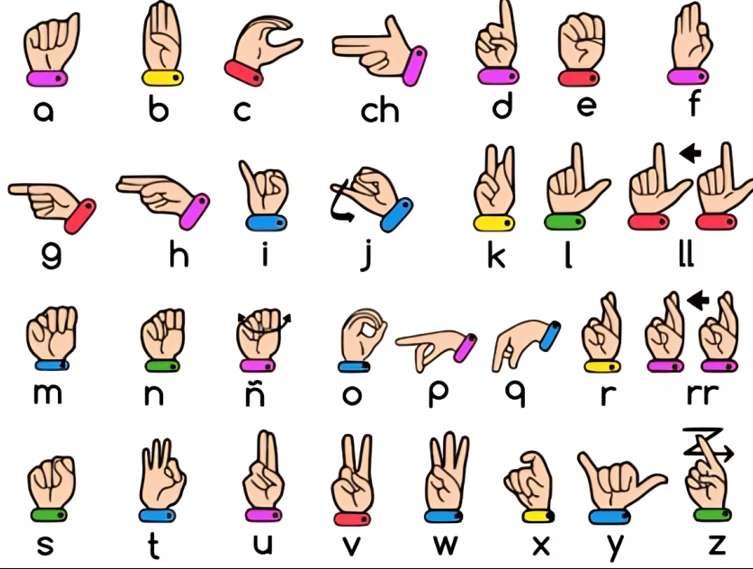
Understanding the Spanish Sign Language alphabet is an essential step toward inclusive communication for the deaf and hard-of-hearing community in Spanish-speaking countries. Known as the "Alfabeto Dactilológico", this manual alphabet is not only a powerful communication tool but also a bridge to deeper human connection. In this guide, we provide a comprehensive and detailed overview of the Spanish sign language alphabet, with clear insights into its usage, structure, and relevance in both social and educational contexts.
What is the Spanish Sign Language Alphabet?
The Spanish Sign Language alphabet (Alfabeto Dactilológico) is an alphabet created manually, representing each letter of the Spanish alphabet in this form. Each letter is formed using a distinct hand shape and movement. This system allows individuals to spell out words, names, or terms that do not have a designated sign, such as proper nouns or technical vocabulary.
Although it resembles fingerspelling in American Sign Language (ASL), Spanish Sign Language (Lengua de Signos Española - LSE) has its own rules and hand configurations for signing words that are unique and culturally specific to Spain and Latin American countries.
Importance of Learning the Spanish Manual Alphabet
Learning the Spanish sign language alphabet is not just about acquiring a new skill—it's about inclusivity, accessibility, and empathy. Whether you're a teacher, healthcare professional, parent of a deaf child, or someone working in customer service, understanding this alphabet enhances your ability to communicate effectively and respectfully.
Why Learn It?
- Facilitates basic communication with deaf or hard-of-hearing individuals
- Enhances cognitive flexibility and memory through learning visual-spatial languages
- Promotes social integration and inclusivity in multicultural settings
- Useful in emergency situations when spoken communication is not possible
The Complete Spanish Sign Language Alphabet (A–Z)
Below is a breakdown of each letter of the Spanish sign language alphabet, described in terms of hand shape and position. These descriptions are optimized for visual learners and supported by commonly accepted standards used in Spanish-speaking regions.
A to E
A – Closed fist, thumb resting on the side of the index finger.
B – Open hand, fingers extended and together, thumb across the palm.
C – Hand forms a curved "C" shape.
D – Index finger points upward, other fingers curled into the palm.
E – Fingers slightly bent, touching the thumb.
F to J
F – Thumb and index finger touch, other fingers raised and spread.
G – Index and thumb slightly apart, like holding a small object.
H – Index and middle fingers extended together while all other fingers folded over.
I – Left hand with its little finger extended. Rest of fingers folded over.
J – Start with the "I" sign, draw a "J" in the air.
K to O
K – Index and middle fingers form a "V" shape, thumb between them.
L – Hand forms an L shape with thumb and index fingers touching at right angles (like an "L").
M – Tips of three fingers rest on the thumb.
N – Tips of two fingers rest on the thumb.
O – Fingers bent into an O shape to form circular "Os".
P to T
P – Same as "K" but hand tilts downward.
Q – Thumb and index pointing down, like a pinch.
R – Index and middle fingers crossed.
S – Closed fist, like the letter "A" but tighter.
T – Thumb placed snugly between index and middle finger for comfort and protection from injury.
U to Z
U – Index and middle fingers together and pointing up.
V – Index and middle fingers form a "V".
W – Three fingers extended upward.
X – Bent index finger, resembling a hook.
Y – Thumb and pinky extended, other fingers folded.
Z – Use the index finger to trace a "Z" in the air.
Special Characters and Accents in Spanish Alphabet
Spanish includes accented characters like Á, É, Í, Ó, Ú, Ñ, and Ü, which are not commonly represented in traditional fingerspelling. Instead, fingerspell the base letter (e.g., "A" for "Á"), and the accent is understood through context or additional gestural cues.
- Ñ is typically spelled out or represented by spelling "N" followed by a contextual gesture or full word.
- Ch, although once part of the alphabet, is now usually spelled as individual letters.
Fingerspelling Tips for Spanish Sign Language
To become proficient in using the Spanish fingerspelling system, consistency and clarity are key. Here are expert-level tips for fluency:
- Maintain consistent hand positioning at chest or shoulder level
- Avoid bouncing or excessive movement—keep gestures clean
- Pause briefly between letters when spelling a new word
- Practice with common names and terms to improve speed
- Engage in mirror practice or record videos for self-correction
Applications of the Spanish Sign Language Alphabet
The Spanish manual alphabet is used in various real-world scenarios beyond basic conversation:
1. Educational Settings
Teachers often employ fingerspelling to assist deaf students with spelling, grammar and reading comprehension lessons.
2. Healthcare Communication
Doctors and nurses fingerspell medical terms not commonly known in sign language, improving patient care and understanding.
3. Legal and Government Services
Clarity and accuracy are crucial in formal communication. Sign language interpreters often rely on the manual alphabet for names, places, and legal terms.
4. Emergency Situations
When verbal communication fails, knowing the manual alphabet can be life-saving.
Spanish Sign Language vs. American Sign Language (ASL)
Though both ASL and LSE use manual alphabets, their structures, signs, and cultural contexts differ greatly, although one should never assume their knowledge translates directly to proficiency in both.
- Alphabet Shape Differences: Letters like T, D, and G vary significantly.
- Language Context: American Sign Language is most often employed within the U.S.
How to Learn the Spanish Sign Language Alphabet Effectively
To master the Spanish sign language alphabet, consider the following strategies:
- Use video tutorials and apps specifically designed for Spanish LSE
- Enroll in certified LSE courses or workshops
- Practice regularly with native LSE signers
- Join online LSE communities for support and feedback
- Combine fingerspelling with full LSE learning to gain functional fluency
Embrace the Power of Inclusive Communication
Mastering the Spanish sign language alphabet is more than a linguistic exercise—it's a powerful act of inclusion, accessibility, and compassion. Whether you're connecting with a deaf family member, colleague, or student, your effort in learning the Alfabeto Dactilológico opens up a world of understanding.