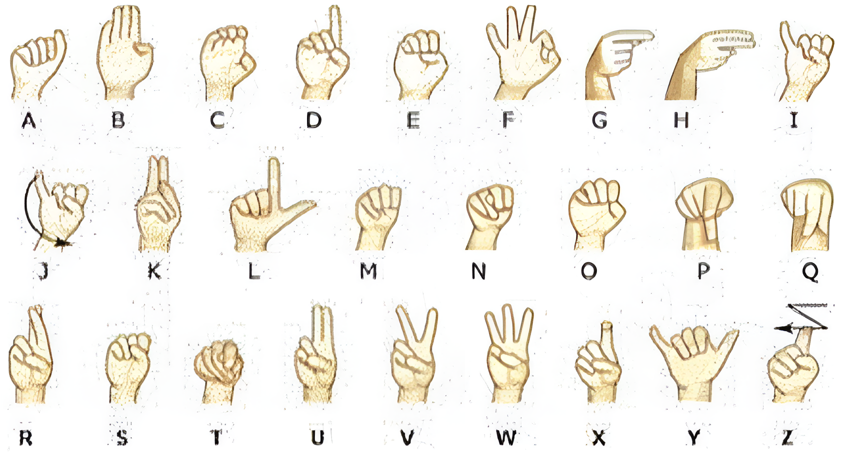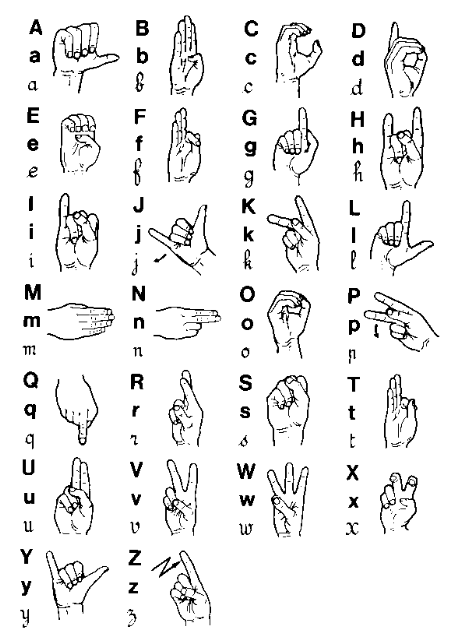
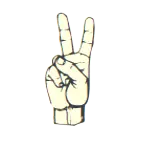
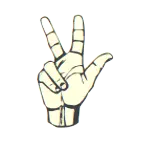
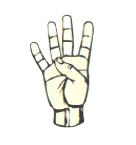
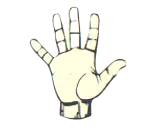
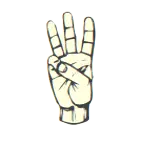
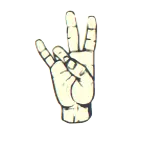
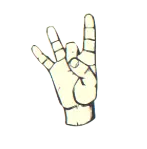
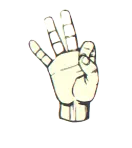
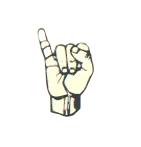
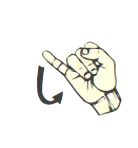
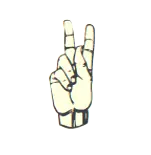
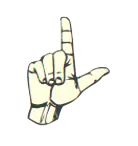
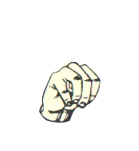
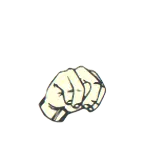
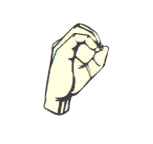
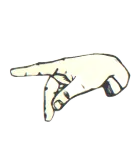
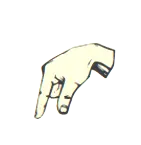
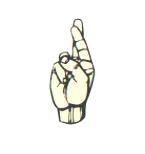
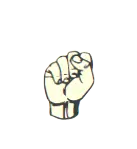
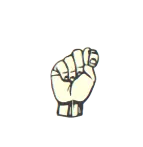
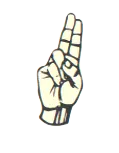
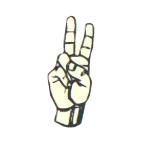
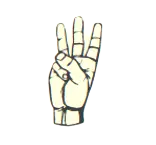
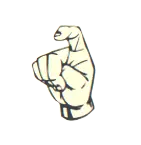
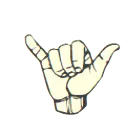
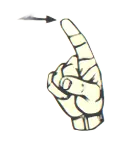
American Sign Language Alphabets
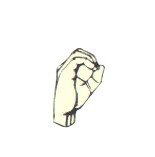
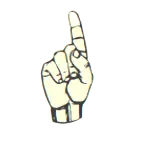
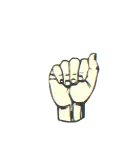
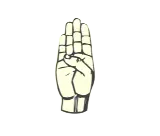
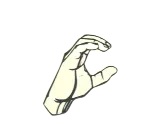
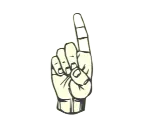
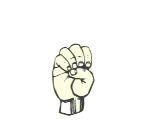
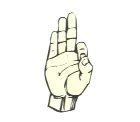
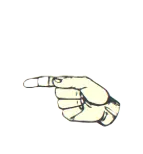
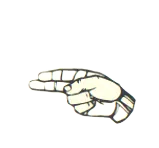
The American Sign Language (ASL) alphabet, or American Manual Alphabet, is a visual language used by Deaf communities in the United States and Canada to communicate through signs. However, it is not a universal language. ASL uses handshapes, movement, location, palm orientation, and non-manual signals, such as facial expressions, to convey meaning. ASL developed from French Sign Language (LSF) and includes regional variations, just like spoken languages. The ASL alphabet uses one-handed handshapes to represent each letter of the English alphabet and is commonly used for fingerspelling names, places, or words that do not have a specific sign.
Hello – Your dominant hand moves outward from your forehead, like a salute. Check below the popular word example of American Sign Language.
See you later – Sign SEE, then flip it into LATER.
I / Me – Point your index finger toward your chest.
Father – Use a five-hand shape at the top of your forehead.
Mother – Use a five-hand shape on your chin.
Yes – Your hand moves like a head nodding.
No – Your fingers form the letters N and O together.
Help – One hand supports the other, lifting upward.
Please – A flat hand circles over your chest.
Thank you – Your hand moves forward from your chin.
Want – Both hands in curved shape pulling toward yourself.
What? – Both hands move in and out with palms up.
Dog – Snap your fingers toward your side like calling a dog.
Cat – Pinch your fingers and pull from your cheeks like whiskers.
Again / Repeat – One hand taps the center of the other palm.
Eat / Food – Hand moves toward your mouth (repeat for food).
Milk – Squeeze your hand like milking a cow.
More – Two O-shaped hands tap together.
Go to – Pointer fingers move forward in the direction you're going.
Bathroom – Letter T shakes side to side (also means toilet/restroom).
Fine – A five-hand move to your chest.
Like – Pull your thumb and middle finger outward from your chest.
Learn – Scoop upward and place into your head.
Sign – Hands move toward yourself as if signing.
Finish / Done – Flip hands outward, like wiping and finishing.
Spanish Sign Language (LSE) Alphabet
Lengua de Signos Española (LSE) is the primary visual language used by the Deaf community in Spain. It’s a beautiful and expressive language that uses handshapes, movements, and facial expressions to represent ideas and emotions. While Spain shares a spoken language with many countries, “Spanish Sign Language is unique” to Spain and is not the same as Mexican Sign Language (LSM) or Latin American sign systems. Each region within Spain, like Madrid, Andalusia, or Catalonia, even has small variations in the way some signs are used. The LSE alphabet is one-handed, and it’s used for fingerspelling names, locations, technical words, or any word that doesn’t have a specific sign. Now check below popular Spanish Sign Language words.
Hola (Hello) – Raise your hand near your forehead and move it outward, similar to a small salute.
Adiós (Goodbye) – Wave your hand gently side to side, smiling warmly.
Gracias (Thank you) – Touch your fingers to your lips, then move your hand forward in a polite gesture.
Por favor (Please) – Place your flat hand on your chest and move it in a small circular motion.
Perdón / Lo siento (Sorry) – Form a fist and rub it in a circle over your chest, the same gesture for apology or regret.
Sí (Yes) – Move your hand up and down, mimicking a nodding motion.
No (No) – Touch your index and middle fingers to your thumb twice, like forming the letters N and O.
Ayuda (Help) – Place one flat hand palm-up, then lift it with your other hand in a thumbs-up shape.
Comida (Food) – Bring your fingers together and tap your mouth twice.
Beber (Drink) – Mimic drinking from a cup or glass.
Familia (Family) – Make two “F” handshapes and circle them together in front of your chest.
Amigo / Amiga (Friend) – Link your index fingers together, then reverse and repeat.
Bien (Good) – Move your dominant hand from your chin outward into your other hand’s palm.
Mal (Bad) – Start at your chin and move your hand outward, palm facing down.
Amor (Love) – Cross your arms over your chest as if hugging yourself.
Querer (Want) – Curve both hands and pull them gently toward your body.
No Quiero (Don’t Want) – Start from the “want” position, then push your hands away.
Casa (House) – Make a triangle shape with both hands touching at the fingertips (like a roof).
Escuela (School) – Bring both flat hands together twice, like clapping books.
Trabajo (Work) – Form both hands into fists and tap the wrists together twice.
Día (Day) – Hold one arm horizontally and move your other hand (in a D-shape) from the elbow down to the wrist, symbolizing sunrise.
Noche (Night) – Make a curved hand move downward over your other hand, representing nightfall.
Gato (Cat) – Pinch your fingers and pull away from your cheeks like whiskers.
Perro (Dog) – Snap your fingers near your hip as if calling a dog.
Feliz (Happy) – Use both hands to brush upward on your chest, smiling as you do it.
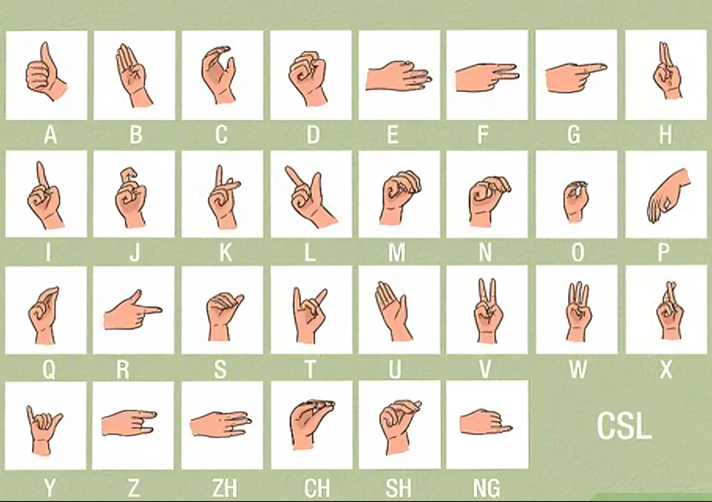
Chinese Sign Language (CSL) Alphabet
Chinese Sign Language (CSL) is the primary language of the Deaf community in mainland China. It's one of the world's most fascinating sign languages because it beautifully blends visual symbols, Chinese culture, and the unique structure of the written Chinese language CSL is not simply a signed version of Mandarin. It has its own grammar, expressions, and rhythm that reflect China’s deep linguistic diversity. While Mandarin Chinese has thousands of written characters, CSL simplifies many ideas into expressive gestures, a bridge between hand, thought, and meaning. Common Chinese Sign Language Words Below are 25 of the most frequently used CSL signs ideal for beginners who want to connect with China’s Deaf community.
你好 (Hello) – Smile and nod slightly.
再见 (Goodbye) – Give a dismissive wave.
谢谢 (Thank you) – Move your flat hand forward from your chin, similar to ASL.
对不起 (Sorry) – Gently rub your fist over your heart in a circular motion.
请 (Please) – Both hands come together slightly and move forward, a polite request gesture.
是 (Yes) – Nod your thumb upward with a small forward motion.
不是 (No) – Shake your hand side to side.
我 (I / Me) – Point to yourself.
你 (You) – Point at the person.
他 / 她 (He / She) – Point to the side (the direction depends on gender context).
我们 (We / Us) – Sweep your finger to include everyone.
爱 (Love) – Cross your arms over your heart.
家 (Home) – Bring fingertips together, forming a roof shape.
吃 (Eat) – Move your fingers toward your mouth twice, as if eating.
喝 (Drink) – Mimic holding a cup and drinking.
工作 (Work) – Bump fists twice.
学习 (Learn) – Tap your temple with a scooping motion.
学校 (School) – Tap both hands together twice, as if clapping books.
水 (Water) – Wiggle your fingers downward to show flowing water.
火 (Fire) – Mimic flames with a flicking hand motion.
日 (Sun / Day) – Circle your hand in the air, representing the sun.
月 (Moon / Night) – Form a “C” handshape and move it across your chest.
好 (Good) – Move your dominant hand from your chin into your other palm.
坏 (Bad) – Palm facing down, move your hand away.
快乐 (Happy) – Brush both hands upward on your chest while smiling.
Mexican Sign Language (LSM) Alphabet
Lengua de Señas Mexicana (LSM) is the official sign language used by the “Deaf community in Mexico”. It is a visual and spatial language, meaning it uses handshapes, movement, facial expression, and body posture to communicate ideas. Although Spanish is the spoken language of Mexico, LSM has its own grammar and structure and is not the same as Spanish Sign Language (LSE). It evolved naturally within Mexico’s Deaf community and reflects the country’s unique culture and linguistic identity. The LSM alphabet is one-handed, like ASL, and is used to spell names, places, and unfamiliar words that don’t have dedicated signs. Now check the popular Mexican Sign Language words below.
Hola (Hello) – Raise your hand near your forehead and move outward like a small salute.
Adiós (Goodbye) – Wave your hand gently from side to side.
Gracias (Thank you) – Touch your fingers to your lips and move your hand forward politely.
Por favor (Please) – Place your flat hand over your chest and make small circles.
Perdón (Sorry) – Make a fist and move it in a circular motion over your chest.
Sí (Yes) – Nod your fist up and down.
No (No) – Bring your index and middle fingers together with your thumb like forming an “N” and “O.”
Ayuda (Help) – Place one flat hand facing upward and lift it with your other hand in a thumbs-up shape.
Comer (Eat) – Bring fingertips together and move toward your mouth once.
Beber (Drink) – Pretend to lift a glass to your lips.
Familia (Family) – Make two “F” handshapes and circle them together in front of your chest.
Amigo (Friend) – Hook your index fingers together, then reverse and repeat.
Bien (Good) – Move your dominant hand from your chin to meet your other palm.
Mal (Bad) – Move your hand outward from your chin with palm facing down.
Amor (Love) – Cross your arms over your chest as if hugging yourself.
Querer (Want) – Curve both hands and pull them toward yourself.
No Quiero (Don’t Want) – Push both hands away from your body.
Casa (House) – Form a triangle shape with both hands, fingertips touching like a roof.
Escuela (School) – Bring your flat hands together twice, like clapping books.
Trabajo (Work) – Make fists and tap the wrists together twice.
Día (Day) – Move one arm from elbow to wrist, showing the sun rising.
Noche (Night) – Curve one hand downward over the other, symbolizing night.
Gato (Cat) – Pinch your fingers and pull from your cheeks like whiskers.
Perro (Dog) – Snap your fingers near your side like calling a dog.
Feliz (Happy) – Use both hands to brush upward on your chest while smiling.
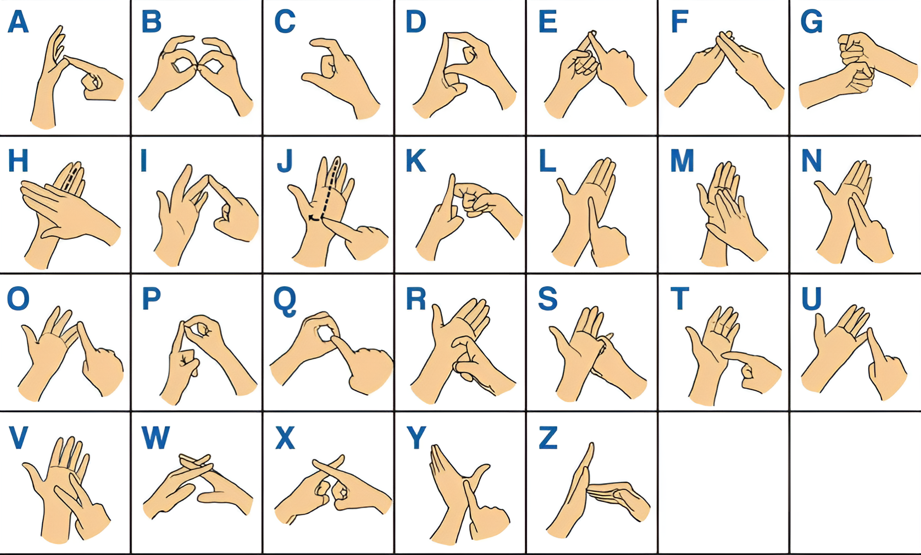
British Sign Language (BSL) Alphabet
British Sign Language (BSL) is the major communicative language for the "Deaf community in the United Kingdom". Unlike ASL and LSM, both one-handed systems, BSL uses a two-handed alphabet, making it visually unique and rich in culture. BSL is a language in its own right, with a structure, vocabulary, and syntax not founded on the word order of English. BSL developed organically within the Deaf community of the UK and is used in England, Scotland, and Wales, though there are small regional differences in some signs. The BSL alphabet is used mainly to spell out names and places or words that don't have signs. It is two-handed, so it does take a bit of coordination, but it is also highly expressive and easily recognizable once you learn it.
Hello – Raise your dominant hand to your forehead and move it outward, like a short salute.
Goodbye – Wave one hand side to side with a friendly expression.
Thank you – Touch your fingertips to your chin and move your hand forward.
Please – Place your flat hand on your chest and make small circles.
Sorry – Make a fist and rub it in a circular motion over your chest.
Yes – Nod your head and make a small downward motion with your dominant hand.
No – Touch your index and middle fingers to your thumb, opening and closing them twice.
Help – Place one hand palm-up and lift it slightly with your other hand in a thumbs-up position.
Eat / Food – Bring your fingertips together and tap your mouth twice.
Drink – Mimic holding a cup and tilt it toward your lips.
Family – Make two “F” handshapes (both hands), circle them together in front of your chest.
Friend – Hook your index fingers together, then reverse and repeat.
Good – Move one hand from your chin into the other palm.
Bad – Move one hand outward from your chin, palm facing down.
Love – Cross your arms over your chest, smiling warmly.
Want – Curve both hands slightly and pull them toward yourself.
Don’t Want – Push both hands outward from your chest.
Home – Form a triangle with both hands, fingertips touching at the top (like a roof).
School – Tap both flat hands together twice, like clapping softly.
Work – Make fists and tap the wrists together twice.
Day – Hold one arm horizontally and move your other hand (in a “D” shape) from the elbow down to the wrist.
Night – Place one curved hand over the other to show darkness.
Cat – Pinch your fingers near your cheeks and pull away like whiskers.
Dog – Snap your fingers at your side, like calling a pet.
Happy – Brush both hands upward over your chest while smiling.
Australian Sign Language (Auslan) Alphabet
Auslan (Australian Sign Language) is the main language of the "Deaf community in Australia", which evolved from "British Sign Language (BSL)", and Scottish Sign Language (SSL). Due to this common historical background, Auslan uses a two-handed fingerspelling alphabet, just like BSL. Auslan is a fully natural language with its own grammar, sentence structure, and vocabulary. It is not derived from English, though it incorporates some English-based signs, and it has strong cultural roots within the Australian Deaf community. It varies regionally, mainly in the Northern and Southern dialects, but the fingerspelling system remains largely consistent throughout Australia. The Auslan alphabet is used for names, places, brands, technical words, and when it's essential to make it distinct from another similar-looking sign. The two-handed structure makes it visually clear and distinct from other sign languages. Now cheek below popula Australian Sign Language words.
Goodbye – Wave one hand side to side in a friendly, relaxed way.
Thank you – Touch your fingertips to your chin and then move your hand forward slightly.
Please – Place your flat hand on your chest and make a gentle circular motion.
Sorry – Form a fist and rub it in a circle over the center of your chest.
Yes – Make a nodding gesture with your hand, moving a fist up and down.
No – Bring your index and middle fingers together with your thumb, opening and closing them twice.
Help – Place one hand palm-up and rest your dominant hand (in a thumbs-up shape) on top, lifting them slightly.
Eat / Food – Bring your fingertips together and tap them lightly to your mouth.
Drink – Pretend to hold a cup and tilt it toward your mouth.
Family – Make two “F” handshapes and circle them together in front of your body.
Friend – Hook both index fingers together, then reverse the position and repeat.
Good – Move one hand from your chin into your other open palm.
Bad – Move your hand outward from your chin with a downward palm orientation.
Love – Cross both arms over your chest in a caring gesture.
Want – Curve both open hands slightly and pull them toward yourself.
Don’t Want – Push both open hands outward and away from your body.
Home – Bring both hands together in a roof-like triangle shape above your head.
School – Tap both flat hands together twice, mimicking a gentle clap.
Work – Make fists with both hands and tap your wrists together.
Day – Hold one arm horizontally and move your other hand down from elbow to wrist.
Night – Curve both hands and bring one over the other to show darkness.
Cat – Pinch your fingers at your cheeks and pull away like drawing whiskers.
Dog – Snap your fingers at your side as if calling a pet dog.
Happy – Move both open hands upward over your chest with a bright facial expression.
Japanese Sign Language (JSL) Alphabet
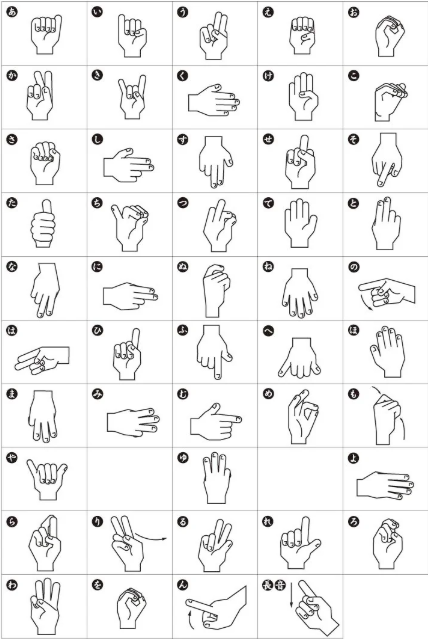
Japanese Sign Language (JSL)is the visual language used by the Deaf community in Japan. It is a full-fledged and natural language with its grammar, expressions, and cultural identity, not based on the word order of spoken Japanese. In contrast to ASL or BSL, JSL does not include an A–Z alphabet. The Japanese writing system does not include any alphabetic writing, so JSL uses a one-handed fingerspelling system based on the Japanese syllabary, Hiragana* sounds, such as a, i, u, e, o, ka, ki, ku, ke, ko, and so on. The uniqueness, expressiveness, and deep relationship with Japanese linguistic structure make the JSL manual alphabet very special. It is mostly used for **names, borrowed words, emphasis, and place names. Now check below the popular Japanese Sign Language words.
Hello – Raise your hand near your forehead and move it outward in a polite gesture.
Goodbye – Wave your hand gently from side to side.
Thank you – Bring your hand from your chin forward with a slight bow.
Please – Place your flat hand on your chest and move it in a small circle.
Sorry – Make a fist and move it in circles over your chest.
Yes – Move your fist downward firmly in agreement.
No – Open and close your index finger and thumb as if saying “no.”
Help – Place one hand palm-up and lift it with your other hand on top showing assistance.
Eat / Food – Bring pinched fingers toward your mouth twice.
Drink – Pretend to lift a small cup to your mouth.
Family – Form “F” hands and circle them around each other.
Friend – Hook your index fingers together, then switch and repeat.
Good – Move your dominant hand forward from your mouth to the other hand.
Bad – Move your hand outward from your mouth with your palm facing down.
Love – Cross your arms over your chest warmly.
Want – Curve both hands and pull them toward your body.
Don’t Want – Push both hands away from yourself firmly.
Home – Bring your fingertips to your cheek twice (similar to indicating “household”).
School – Tap your flat hands together lightly like clapping.
Work – Tap your wrists together twice with both hands in fists.
Day – One arm is horizontal while the other arcs downward toward it.
Night – Fold your curved hand over your other hand showing darkness.
Cat – Pinch and pull your fingers outward from your cheeks like whiskers.
Dog – Snap your fingers to your side as if calling a dog.
Happy – Brush both hands upward over your chest while smiling.
French Sign Language (LSF) Alphabet
Langue des Signes Française (LSF) is one of the oldest and most highly influential sign languages in the world. It is used by the Deaf community across France, as well as parts of Switzerland and Belgium. LSF plays a historical role due to the fact that it influenced many modern sign languages, including American Sign Language (ASL). LSF is a system of one-handed fingerspelling, as is ASL, but the shapes and movements are specific to French Deaf culture. It has its own full grammar, set of facial expressions, and natural linguistic structure, which is not based on spoken French. The LSF alphabet is mainly used for names, places, technical terms, and borrowed words. Although this is a one-handed manual alphabet, several handshapes differ from ASL, and LSF should be learned as its own language rather than assuming similarities. Now check below the popular French Sign Language words.
Hello – Move your hand outward from your forehead in a short, polite motion.
Goodbye – Wave one hand gently from side to side.
Thank you – Touch your fingertips to your chin and move your hand forward gracefully.
Please – Place your hand over your chest and draw a small circle.
Sorry – Make a fist and rub it on your chest in a slow circular motion.
Yes – Nod your hand downward as if agreeing.
No – Bring your index and middle finger to your thumb, opening and closing them twice.
Help – Place one hand palm-up and lift it slightly with your other hand on top.
Eat / Food – Bring your fingertips toward your mouth twice.
Drink – Pretend to hold a small cup and tilt it toward your lips.
Family – Form “F” handshapes with both hands and circle them together.
Friend – Hook your index fingers together, then reverse and repeat the motion.
Good – Move your dominant hand from your chin into your other open palm.
Bad – Move your hand outward from your mouth, palm facing down.
Love – Cross your arms over your chest warmly.
Want – Curve both hands slightly and pull them toward your body.
Don’t Want – Push both hands outward away from yourself.
Home – Bring your fingertips to your cheek twice, representing “place of living.”
School – Tap both flat hands together gently, like soft clapping.
Work – Tap your closed fists together at the wrists twice.
Day – Position one arm horizontally and slide your other hand downward from elbow to wrist.
Night – Fold a curved hand over the back of your other hand to show darkness falling.
Cat – Pinch your fingers near your cheeks and slide outward like whiskers.
Dog – Snap your fingers downward beside your leg as if calling a dog.
Happy – Brush both hands upward across your chest while smiling.
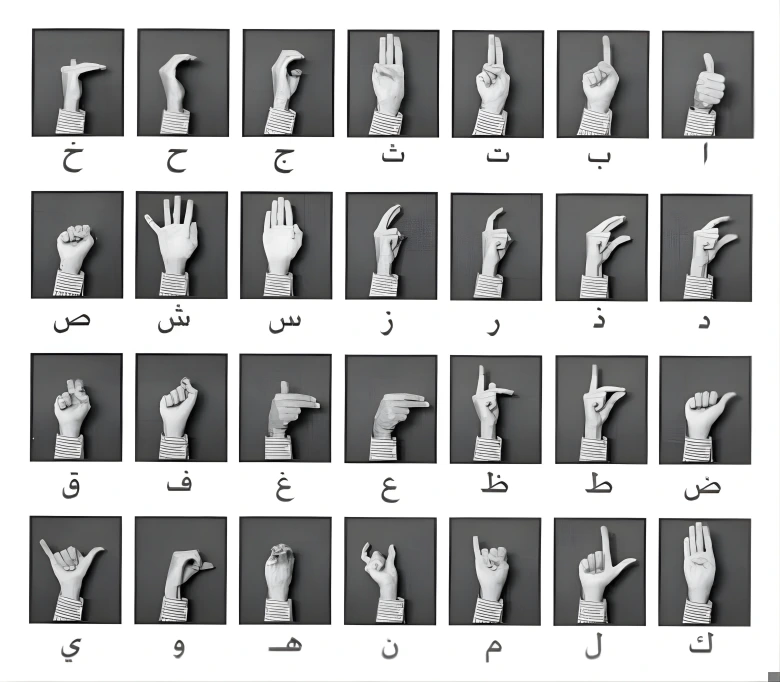
Arabic Sign Language Alphabet
It is known as Arabic Sign Language in several countries of the Middle East and North Africa: Saudi Arabia, the UAE, Jordan, Egypt, Kuwait, and others. Though it may have local peculiarities, it also has a standardized fingerspelling system devised to facilitate communication in everyday contexts, provide education, and thus support Deaf communities throughout the Arabic-speaking world. ArSL utilizes the one-handed fingerspelling alphabet, yet instead of representing the English letters A–Z, it represents the Arabic alphabet, such as “ا (Alif), ب (Ba), ت (Ta)” and so on. These handshapes are visually expressive and often mirror the written shapes of Arabic letters. ArSL is generally used for the names, countries, brands, Quranic terms, and words that don't have a specific sign. Since Arabic is written right-to-left, many ArSL signs also reflect that directional flow.
Hello (مرحبا) – Raise your hand near your forehead and move it outward in a polite gesture.
Goodbye (مع السلامة) – Wave your hand gently from side to side.
Thank you (شكراً) – Move your open hand forward from your chin with a soft expression.
Please (من فضلك) – Place your flat hand on your chest and make a small circle.
Sorry (آسف) – Form a fist and rub it on your chest in a gentle circular motion.
Yes (نعم) – Move your fist up and down, like a nod.
No (لا) – Bring your index finger left and right in a short “no” motion.
Help (مساعدة) – Place your dominant hand (thumbs-up) on your opposite palm and lift upward.
Eat / Food (طعام) – Bring your fingertips toward your mouth twice.
Drink (شراب) – Pretend to tilt a small cup to your lips.
Family (عائلة) – Bring both hands together forming a circle around your chest.
Friend (صديق) – Hook your index fingers together and repeat the motion.
Good (جيد) – Move your hand from your chin downward into your other open palm.
Bad (سيئ) – Move your hand outward from your mouth, palm down.
Love (حب) – Cross your arms over your chest warmly.
Want (أريد) – Curve both hands and pull them toward your body.
Don’t Want (لا أريد) – Push both curved hands outward firmly.
Home (منزل) – Form a small roof shape by joining your fingertips together above your head.
School (مدرسة) – Tap your flat hands together gently like soft clapping.
Work (عمل) – Tap both fists together at the wrists twice.
Day (نهار) – Move your dominant hand from your elbow downward along your other arm.
Night (ليل) – Curve one hand over the back of your other hand to show darkness.
Cat (قط) – Pinch your fingers by your cheeks and pull away like whiskers.
Dog (كلب) – Snap your fingers beside your leg as if calling a pet.
Happy (سعيد) – Brush both hands upward across your chest while smiling.
FAQs About Sign Language alphabet
What are the 5 rules of ASL?
The five rules of ASL are handshape, movement, location, orientation, and facial expressions.
What is the fastest way to learn sign language?
The Fastest way is to learn from real signers through classes, online videos, daily practice, and immersion.
How to learn the sign language alphabet?
Start by learning the hand shape for each letter, then practice spelling simple words. Use flashcards, videos, or apps to help memorize and practice daily. Consistency is key! 📚🤲
When learning sign language, the alphabet is the first thing that is taught.
Yes, the alphabet is usually the first step because it helps learners spell words that don’t have specific signs, making communication easier from the start. 👐
What is Z in ASL?
In ASL, Z is drawn in the air using your index finger to trace the shape of the letter.
What is the alphabet in sign language A to Z?
The alphabet in sign language from A to Z is represented by distinct hand gestures for each letter. For example, 'A' is a closed fist with thumb on the side, 'B' is an open hand with fingers together, and so on. 🤚✌️
How to learn sign language?
Start with the alphabet and common words, then progress to phrases and grammar. Use online resources, classes, and practice regularly with others. Patience and consistency help you learn effectively. 👩🏫🤟
Is sign language universal?
No, sign language is not universal. Different countries and regions have their own sign languages, like ASL (American Sign Language), BSL (British Sign Language), and others. 🌍🤚
How to say thank you in sign language?
To say "Thank you," place the fingers of one hand near your lips and move your hand forward, away from your face. 🙏
How are you in sign language?
To ask "How are you?" point both hands forward with fingers spread, then move them in small circles or tilt your hands up slightly while raising your eyebrows. 🤔🤟
How to say I love you in sign language?
The "I love you" sign combines the letters I, L, and Y by extending the thumb, index finger, and pinky finger while keeping the middle and ring fingers down. ❤️🤟
How to say hi in sign language?
To say "Hi," raise your hand to your forehead like a small salute and move it outward. 👋
What in sign language?
The sign for "What" usually involves holding both hands open, palms up, and shaking them slightly side to side. 🤷♂️
How to do sign language?
Learn the basics like the alphabet and common signs, practice regularly, watch videos or take classes, and try communicating with sign language users. 👐📚
How to say please in sign language?
To say "Please," place your flat hand on your chest and move it in a circular motion. 🙏
When was sign language invented?
Sign language has been used for centuries, but the first formal sign language was developed in the 18th century, with the establishment of deaf schools in Europe and America. 📜🕰️
How do you say thank you in sign language?
Same as above: fingers near lips, then move hand forward. 🙏
Why in sign language?
The sign for "Why" usually involves touching your forehead with one hand, then moving it away while forming a "Y" handshape (thumb and pinky extended). 🤔
How do you say I love you in sign language?
Use the combined "I," "L," and "Y" handshape as mentioned before. ❤️🤟
How to say you're welcome in sign language?
To say "You're welcome," place your dominant hand near your chin and move it outward in a small arc. 👍
How to say hello in sign language?
Same as "Hi" — a small salute motion with your hand. 👋
How to say sorry in sign language?
Make a fist and rub it in a circular motion on your chest. 🤲
Is in sign language?
This question is unclear—if you mean the sign for the word "is," it’s often implied in context and not signed explicitly in ASL. 🤷♀️
How long does it take to learn sign language?
It varies by person and dedication, but basic proficiency can take about 4 to 6 hours of focused learning daily over a few months. 🕒📅
How to say you're welcome in sign language?
Refer to "You're welcome" above. 👍
Who invented sign language?
Sign language was not invented by one person. Various deaf communities developed their own languages over time. Thomas Hopkins Gallaudet helped establish American Sign Language in the U.S. in the early 1800s. 🧑🏫