Sign Language Words

Search and compare thousands of words and phrases in American Sign Language (ASL). The largest collection of image signs online. We have collection of all popular words in image sign which you can view, read how to say any word in sign as a text also and you can also download image for offline use.

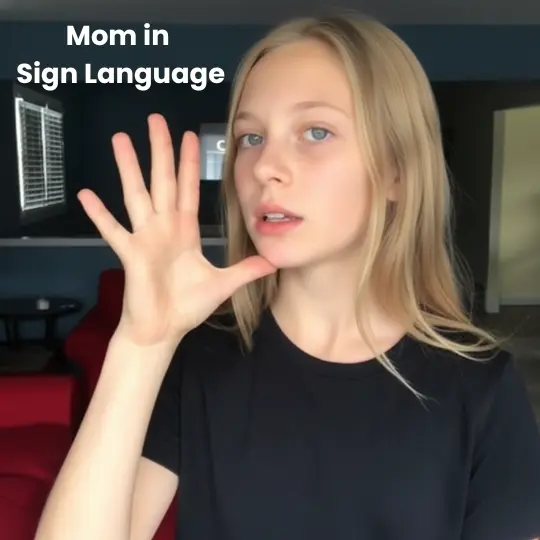
Mom In Sign Language

Teen girl signing MOM in American Sign Language with open hand thumb touching chin

To sign mom in American Sign Language (ASL), open your dominant hand with fingers spread (a 5 handshape) and tap your thumb against your chin.

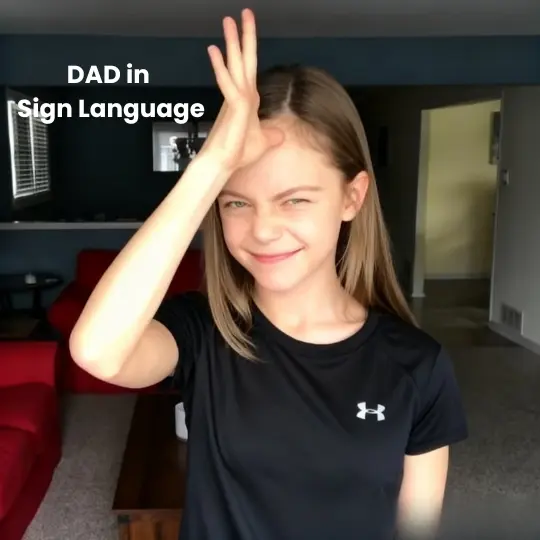
Dad in Sign Language

Girl demonstrating DAD in American Sign Language with open hand raised to forehead

To sign Dad in American Sign Language (ASL), extend and spread your fingers on your dominant hand to form a 5 handshape, then tap your thumb against your forehead twice.

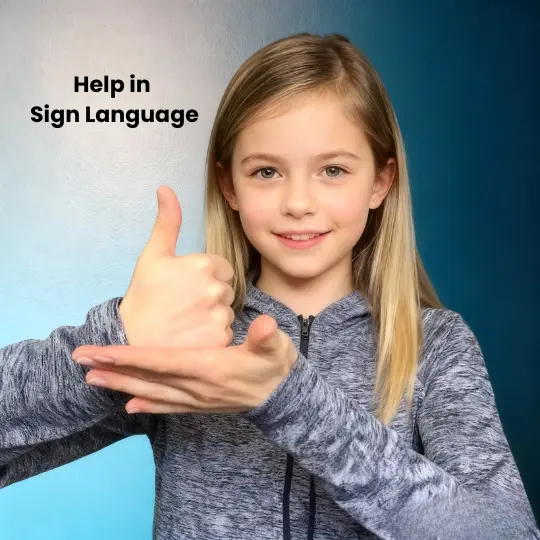
Help In Sign Language

Girl showing HELP sign in ASL with thumbs-up hand resting on open flat palm

To sign help in American Sign Language (ASL), place your dominant hand in a thumbs-up (or A) shape on top of your flat, palm-up non-dominant hand and move both hands upward together.

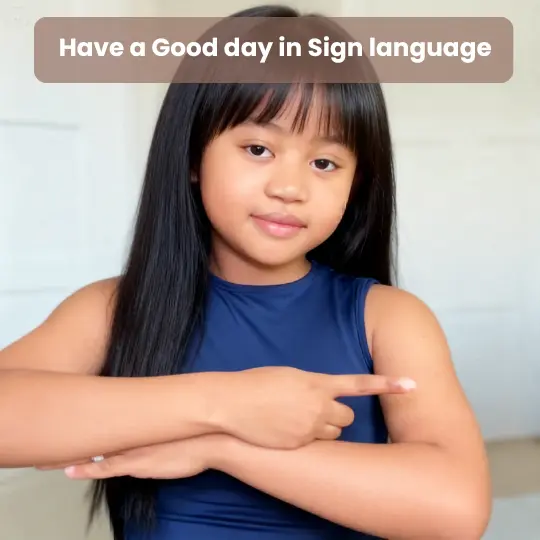
Have a Good Day in Sign Language

Child signing Have a Good Day in ASL with crossed arms and index finger pointing outward

To sign Have a Good Day in American Sign Language (ASL), follow these three steps: 1) HAVE: Place both hands in bent 'B' shapes, bringing fingertips to your chest. 2) GOOD: Touch your dominant hand fingertips to your chin, moving it down to meet your non-dominant hand. 3) DAY: Extend your non-dominant arm horizontally. Place your dominant elbow on your non-dominant hand, then arc your dominant hand down in a sunset motion.

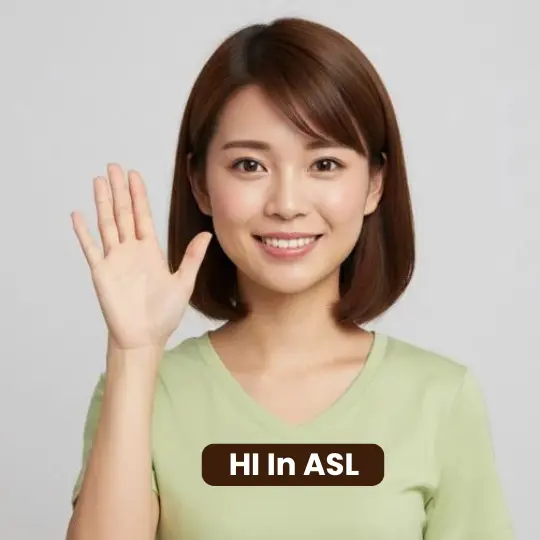
Hi in American Sign Language

Woman demonstrating HI in American Sign Language with open flat hand raised beside face

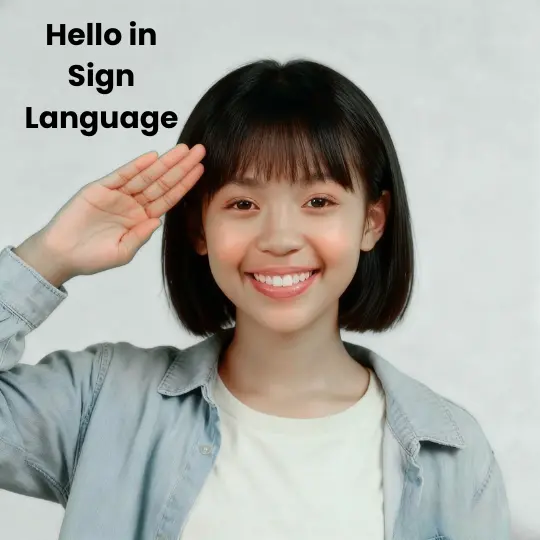
To sign "Hi" (or Hello) in American Sign Language (ASL), place your dominant hand near your forehead (near the temple) with fingers together and palm facing slightly outward, then move it outward and away from your body, similar to a salute.

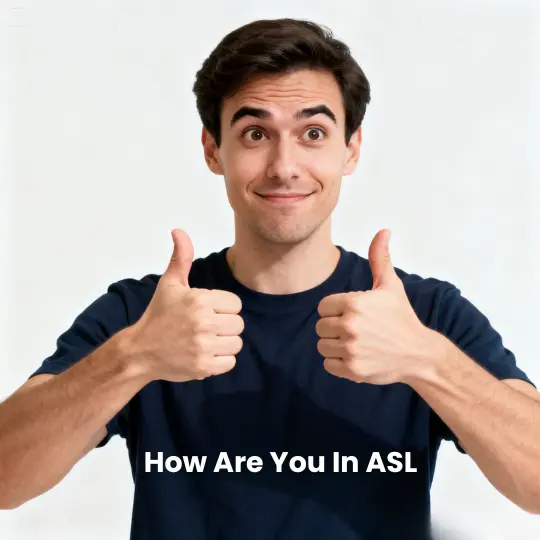
How Are You In ASL

Man signing How Are You in ASL with both thumbs up facing outward

To sign How are you? in ASL, bring both hands into a curved shape with knuckles together, palm-down, and roll them forward to palm-up, finishing by pointing toward the person.

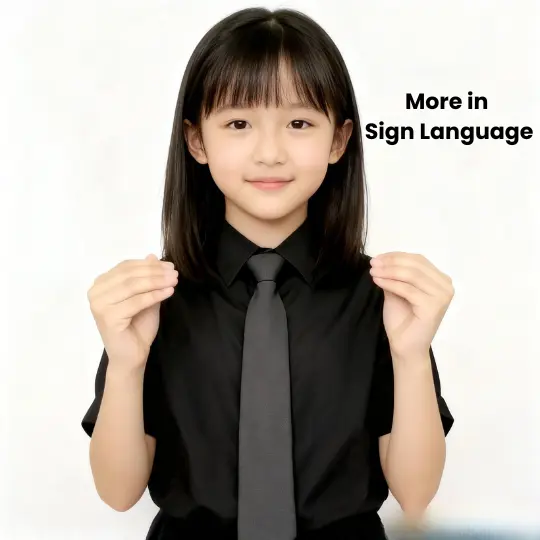
More In American Sign Language

Child demonstrating MORE in ASL by bringing both pinched hands together at fingertips

In American Sign Language (ASL), the sign for "more" is made by forming both hands into flattened O shapes (tips of fingers and thumbs touching) and tapping the fingertips together.

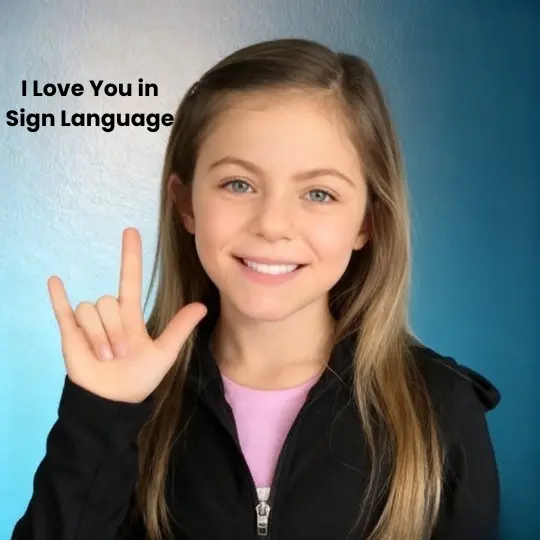
I Love You In Sign Language

Girl making I Love You handshape in ASL with pinky, index finger, and thumb extended

To sign I love you" in American Sign Language (ASL), extend your thumb, index finger, and pinky finger while keeping your middle and ring fingers closed against your palm. Hold your hand up with the palm facing forward, often with a slight back-and-forth movement for emphasis.

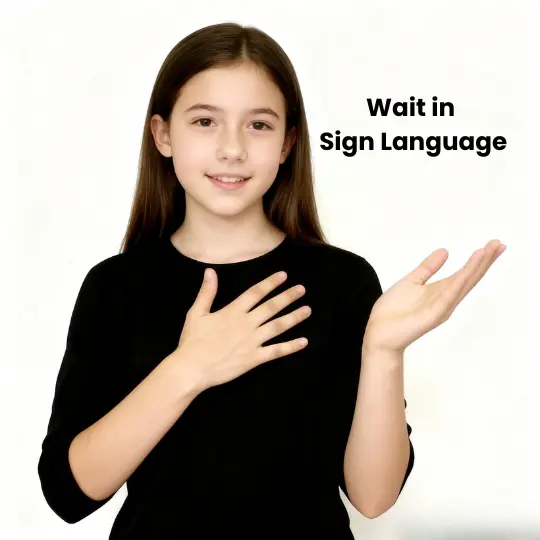
Wait In American Sign Language

Girl showing WAIT in ASL with one hand on chest and other hand open palm facing up

To sign wait in American Sign Language (ASL), hold both hands out at chest level with palms facing upward and fingers spread apart, then wiggle or flutter your fingers. This motion often looks like you are "waiting" or wiggling your fingers patiently

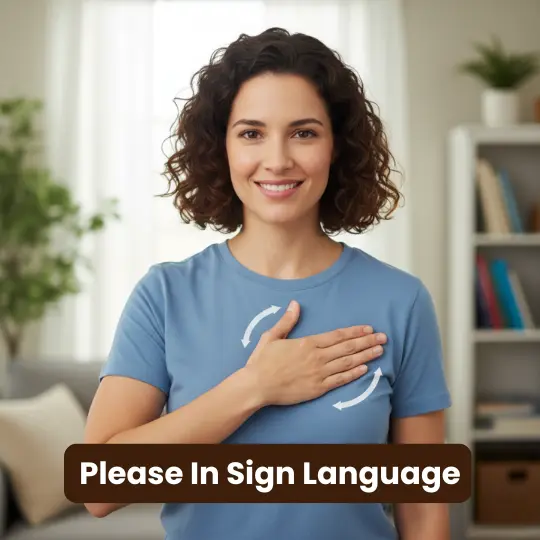
Please In Sign Language

Woman signing PLEASE in ASL with flat hand rubbing circular motion on chest

To sign please in American Sign Language (ASL), place your flat dominant hand (fingers together, thumb extended) on the center of your chest and rub it in a circular, clockwise motion a few times.

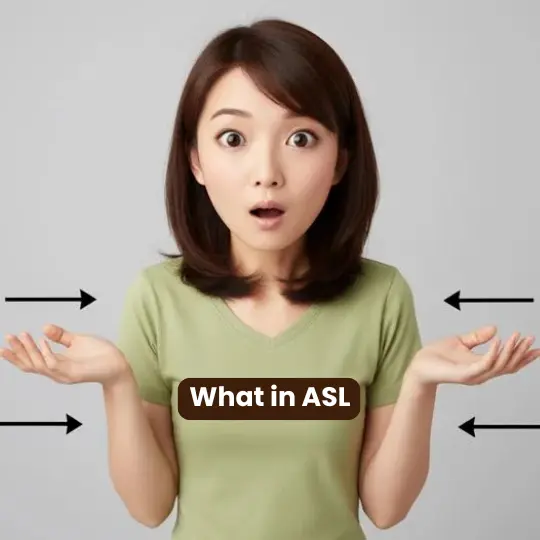
What In American Sign Language

Woman demonstrating WHAT in American Sign Language with both palms open and spread outward

To sign what in American Sign Language (ASL), hold both hands in front of you with palms up and fingers relaxed or slightly open, then shake them gently side-to-side while furrowing your eyebrows.

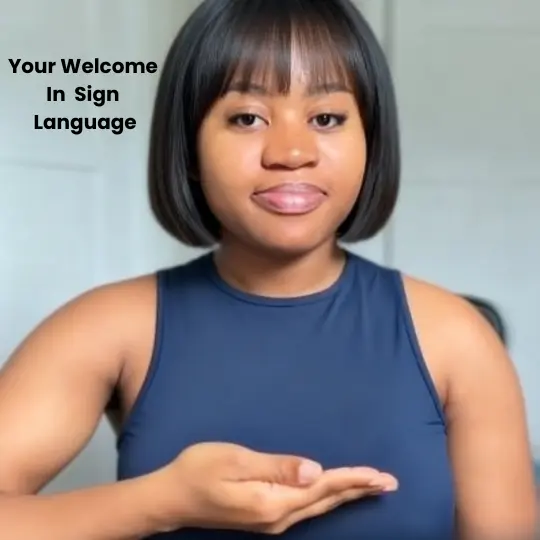
Your Wecome In Sign Language

Woman signing YOU'RE WELCOME in ASL with flat hand moving forward from chin outward

In American Sign Language (ASL), You're Welcome is commonly signed by placing an open dominant hand (palm toward chest) on your chest and moving it forward in a polite gesture, often acknowledging thanks.

FAQs About Sign Language Words

What are sign language words?

Sign language words are visual gestures, hand movements, facial expressions, and body language used to communicate ideas and emotions. Each sign represents a word, phrase, or concept in a specific sign language. 🤟

Are sign language words the same in every country?

No, sign language words are different across countries and regions. For example, American Sign Language (ASL) and British Sign Language (BSL) use many different signs and grammar systems. 🌍

Why are facial expressions important in sign language?

Facial expressions play a major role in sign language because they help show emotions, tone, and meaning. Without expressions, a sign can sometimes become unclear or change meaning completely. 😊

Can one sign have multiple meanings?

Yes, some signs can have different meanings depending on context, facial expressions, or movement. Just like spoken words, the meaning often depends on how and where the sign is used. ✨

Do sign language words follow grammar rules?

Yes, sign languages have their own grammar and sentence structure. The order of signs may be different from spoken languages, and movement or space can also affect meaning. 📚

Are fingerspelling and sign language words the same?

No, fingerspelling uses hand shapes to spell individual letters, while sign language words are complete signs that represent ideas or concepts directly. Fingerspelling is often used for names or unfamiliar words. 🔤

How many sign language words are there?

There are thousands of signs in every sign language, and new signs continue to develop over time. The vocabulary grows naturally as communities create signs for modern terms and technology. 📖

Can children learn sign language words easily?

Yes, children can learn sign language words very quickly, especially when exposed to them regularly. Many children use signs naturally to communicate before they fully develop spoken language skills. 👶

Do sign language words change over time?

Yes, sign language evolves just like spoken languages. New signs are created, older signs may change, and different communities can develop their own styles and variations. ⏳

Why is learning sign language words important?

Learning sign language words helps improve communication with deaf and hard-of-hearing individuals, promotes inclusion, and allows people to connect with diverse communities more effectively. 🤝