
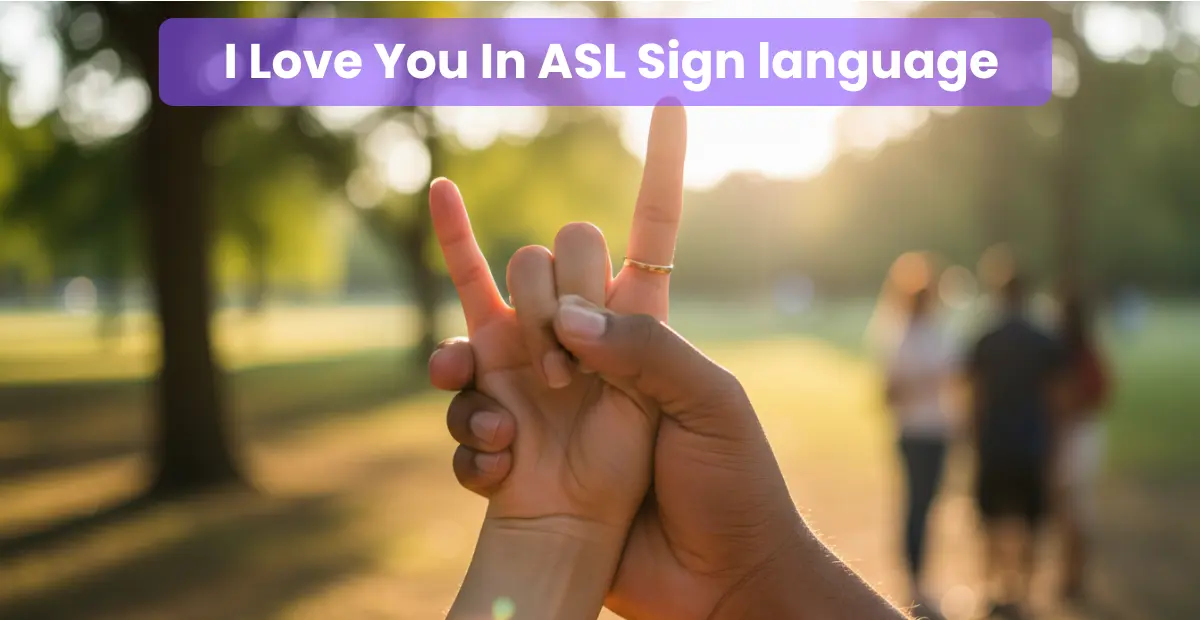
The I Love You hand sign commonly known as the ILY sign is one of the most recognized gestures in American Sign Language (ASL). It beautifully combines three letters of the manual alphabet: I, L, and Y, merged into a single, powerful hand shape.
What makes this sign truly remarkable is how it has crossed from the Deaf community into mainstream culture. You’ve seen it at concerts, sports events, and on social media. Celebrities, musicians, and even politicians have flashed it to crowds around the world yet its roots lie deep within the rich heritage of the Deaf and Hard-of-Hearing community.
Whether you want to connect with a Deaf loved one, learn the basics of ASL, or simply express love in a universal visual language, mastering this sign is a meaningful first step.
Step-by-Step: How to Sign I Love You
The ILY sign is one of the easiest ASL signs to learn. Follow these five simple steps and you’ll have it in under two minutes:
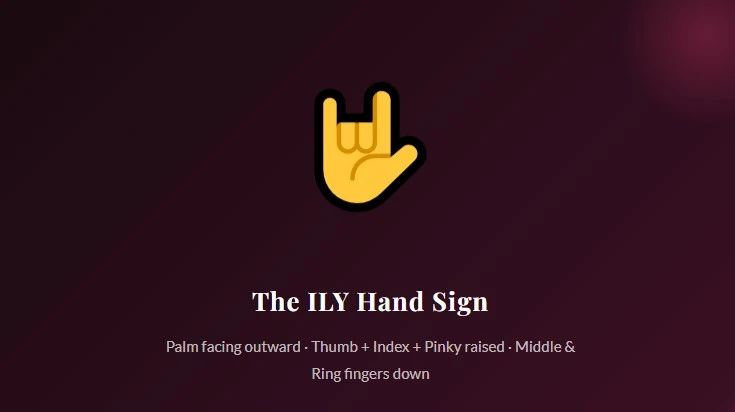
Raise Your Pinky Finger (the “I”)
- Extend your pinky finger upward. This represents the letter I in the manual alphabet — it’s the foundation of the sign.
Extend Your Index Finger (the “L”)
- Raise your index finger alongside your pinky. Combined with your thumb, this forms the letter L — representing “Love.”
Stick Out Your Thumb (the “Y”)
- Extend your thumb outward. Your pinky and thumb together represent the letter Y — completing the “You” in the sign.
Fold Your Middle & Ring Fingers
- Press your middle and ring fingers down against your palm. These two fingers stay down throughout the sign.
Face Your Palm Outward & Hold
- Turn your hand so your palm faces the person you’re speaking to. Hold your hand at about head height. You can add a gentle wave or shake for emphasis and warmth.
The Role of Facial Expressions in ASL
In American Sign Language, your face is part of the language. Unlike spoken English where tone of voice carries emotion, ASL uses facial expressions as grammatical markers.
When signing “I Love You,” your expression matters enormously:
- Warm smile: Makes the sign feel genuine and affectionate — perfect for friends, family, and romantic partners.
- Raised eyebrows: Can indicate a question — “Do you love me?” — so keep brows neutral or relaxed for a statement.
- Direct eye contact: Establishes connection and sincerity. In ASL, looking away while signing can feel dismissive.
- Tilted head: Adds tenderness and warmth to the expression, especially in intimate or emotional contexts.
Remember: two people can make the exact same hand shape but convey completely different messages based solely on their facial expression. Sign with your whole face, not just your hand.
Cultural Meaning & History of the ILY Sign
The ILY sign carries profound meaning within the Deaf and Hard-of-Hearing community. It is not merely a convenience — it is a symbol of identity, belonging, and linguistic pride.
Origins in the Deaf Community
The ILY hand shape is believed to have naturally evolved from the manual alphabet used in ASL. Combining the fingerspelled letters I, L, and Y into a single elegant gesture created a sign that was both efficient and emotionally resonant. Over decades, it became a cornerstone greeting and farewell within Deaf culture.
Spread into Mainstream Culture
The ILY sign crossed into popular culture gradually. Rock musicians adopted the gesture (often confused with “rock on” 🤘 — which is similar but has no thumb). Today you’ll see it at concerts, sporting events, graduation ceremonies, and on social media. Presidents, athletes, and celebrities have used it publicly — each time bringing greater visibility to ASL and the Deaf community.
🌍Did You Know?
ASL is not the only sign language in the world. There are over 300 distinct sign languages globally. “I Love You” looks different in British Sign Language (BSL), French Sign Language (LSF), and others — each with its own beautiful expression.
More Than a Goodbye
Within the Deaf community, the ILY sign serves many functions beyond romantic love. It is used to say goodbye, express gratitude, show solidarity, and affirm connection. It is a sign that transcends language barriers and speaks directly to the heart.
Common Mistakes Beginners Make
Learning a new language takes practice. Here are the most frequent errors new signers make — and how to correct them:
- Confusing ILY with “Rock On” 🤘: The rock sign keeps the thumb folded against the palm. In the ILY sign, the thumb must be extended outward. Always extend your thumb!
- Forgetting facial expression: Signing with a blank face feels cold and incomplete in ASL. Always pair the hand shape with a genuine, warm expression.
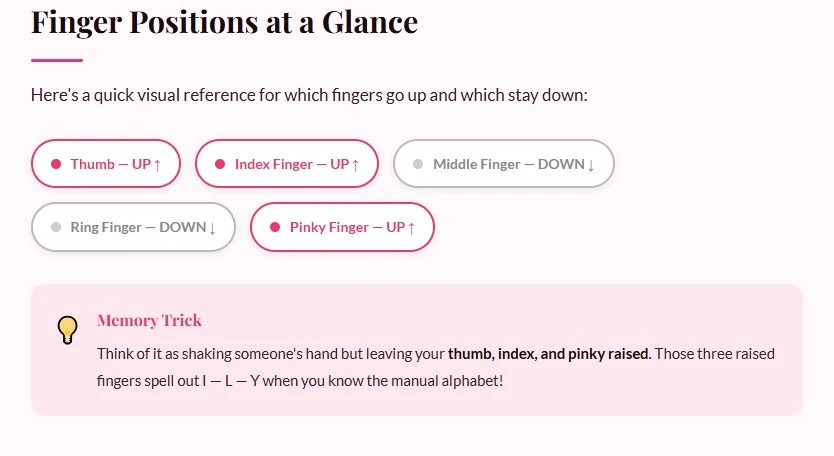
- Raising the wrong fingers: Double-check — middle and ring fingers go DOWN. Only thumb, index, and pinky are extended.
- Turning the palm inward: Your palm must face outward toward the other person, not toward yourself. Reversing it changes the meaning entirely.
- Signing too fast without connection: Rushing the sign removes its emotional power. Hold it for a moment, make eye contact, and let the sign breathe.
Practice Tips for Beginners
Consistent, mindful practice is the key to natural signing. Here’s how to get comfortable quickly:
- Use a mirror: Practice in front of a mirror so you can see your hand exactly as others see it. This builds muscle memory fast.
- Practice with family & friends: Replace your verbal goodbye with the ILY sign every day. Repetition creates fluency.
- Watch ASL videos daily: Platforms like YouTube have thousands of free ASL lessons. Watch native signers to absorb natural rhythm and expression.
- Learn the manual alphabet: Understanding the A-Z hand shapes helps you grasp why the ILY sign looks the way it does — and builds a foundation for more ASL vocabulary.
- Engage with the Deaf community: Attend local ASL meetups, Deaf events, or online communities. Real conversation is the most powerful teacher.
- Be patient and consistent: Like any language, ASL takes time. Celebrate small wins — every new sign you learn is a bridge to a new connection.
Learn All basic and popular sign language words at our site. We provide hand thumb sign images.
Frequently Asked Questions
Is the ILY sign universally understood by all Deaf people?
The ILY sign is specific to American Sign Language (ASL). While many Deaf people globally may recognize it due to cultural crossover, it is not used the same way in British Sign Language (BSL), Australian Sign Language (Auslan), or other regional sign languages. Always confirm which sign language your conversation partner uses.
Is the “I love you” sign the same as the “rock on” or “devil horns” gesture?
They look similar but are different. The rock on (🤘) gesture keeps the thumb tucked against the palm, while the ASL ILY sign has the thumb extended outward. In ASL, an extended thumb is essential to the sign’s meaning.
Can hearing people use the ILY sign?
Absolutely! Many hearing people use the ILY sign with Deaf family members, in public as a warm goodbye, or to show love across a noisy room. Using it respectfully and learning more ASL is a wonderful way to honor Deaf culture.
How do I sign “I love you” vs. just “love” in ASL?
The standalone word LOVE in ASL is signed by crossing both hands over the chest (like giving yourself a hug). The ILY sign combines I + L + Y into one shape, and is used specifically for the phrase “I love you.” You can also sign each word separately for greater emphasis.
Which hand should I use to sign ILY?
Use your dominant hand — the same hand you write with. If you’re right-handed, use your right hand. Left-handed signers use their left hand. Consistency in which hand you use is important across all ASL signs.
Can I teach the ILY sign to children?
Yes! The ILY sign is perfect for young children. Many parents teach basic ASL signs to babies and toddlers before they can speak verbally. It builds communication skills early, fosters emotional expression, and creates an early appreciation for the Deaf community and inclusive communication.